
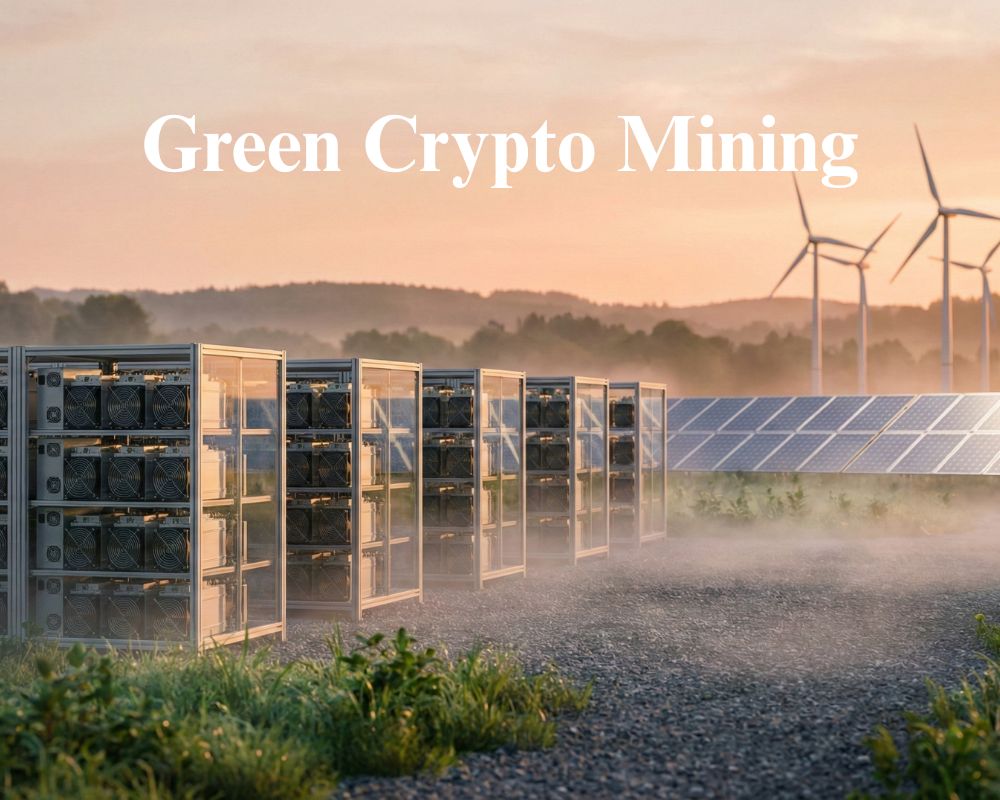

Imagine wind turbines or solar panels powering Bitcoin mining rigs. Green crypto mining is precisely this: an eco-friendly approach to cryptocurrency mining that uses renewable energy and efficiency measures to validate blockchain transactions cryptominerbros.com. This model has spiked in popularity as climate concerns and energy costs grow. In 2025, major miners and governments are racing to cut carbon footprints. Analysts note that over half of Bitcoin’s electricity now comes from “sustainable” sources (42.6% renewables, 9.8% nuclear) jbs.cam.ac.uk, up sharply in two years. In short, “green crypto mining” means mining with wind, solar, hydro, and other clean power, dramatically reducing greenhouse emissions cryptominerbros.com.
What Is Green Crypto Mining?
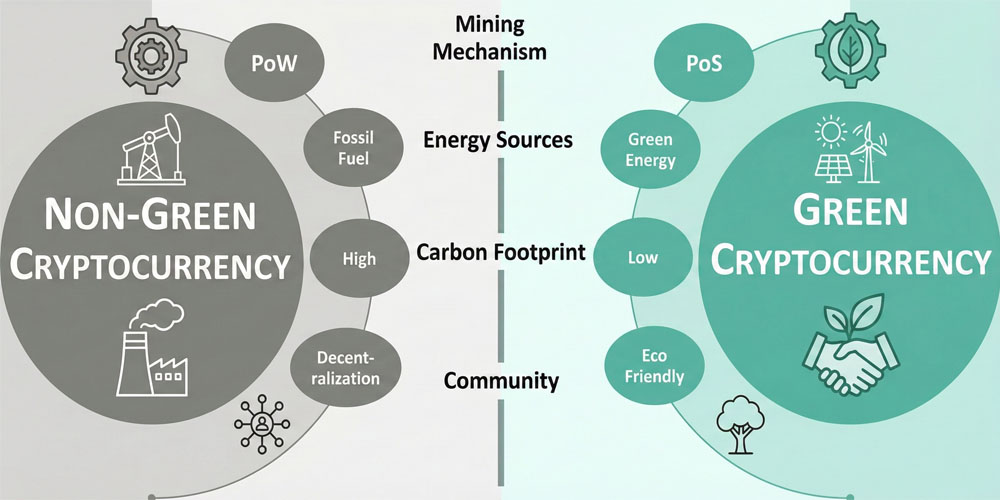
Green crypto mining means using clean energy sources and efficiency techniques in cryptocurrency mining. It contrasts with traditional mining, which often relies on coal or natural gas. By definition, green mining “reduces energy consumption and greenhouse gas emissions” by leveraging renewable sources cryptominerbros.com. In practice, this includes co-locating mines with solar or wind farms, using hydropower during rainy seasons (as was common in Sichuan’s Bitcoin mines), or even capturing flared natural gas to feed generators.
One driver of its recent spike is data: miners report sustainable energy usage has jumped. The Cambridge Digital Mining Industry Report found that by 2024, 52.4% of Bitcoin mining power came from sustainable sources (42.6% renewables, 9.8% nuclear) jbs.cam.ac.uk, compared to only 37.6% in 2022. In other words, the shift to green power is in full swing. Another booster is market forecasts: analysts predict the broader “green mining” market (including technology and services) will grow from $11.0 billion in 2022 to $17.6 billion by 2027 cryptominerbros.com. This optimism is echoed by investors and tech firms pouring capital into renewable-powered mining projects.
Why Green Crypto Mining is Surging?
Green crypto mining is surging because it aligns crypto with climate goals and profit. Optimized ASIC hardware and renewable power contracts now make sustainable mining profitable. Experts argue that when done right, it can turn crypto’s energy use from an environmental liability into a net positive for grids and communitiesatlanticcouncil.org.
The crypto community’s priorities are changing. Ethereum’s move to proof-of-stake (PoS) cut its energy use by 99.9%, signaling that the crypto industry can prioritize sustainability. As one Atlantic Council report notes, with renewable-powered mining, crypto can become a “strategic utility for meeting climate targets,” supporting grid transitions rather than opposing them atlanticcouncil.org. In practice, this means miners are increasingly signing long-term power purchase agreements for green energy and using AI to optimize operations for lower energy draw.
In summary, green crypto mining is rising because it’s becoming technically feasible and economically attractive. Miners can still earn crypto rewards, but now they do so using wind, solar, hydro or other low-carbon energy cryptominerbros.com. This helps them sell clean electricity to crypto instead of fossil fuels. The result: a surge of interest and investment in “green” mining, from small startup miners to large publicly-traded firms.
Key Players and Statistics
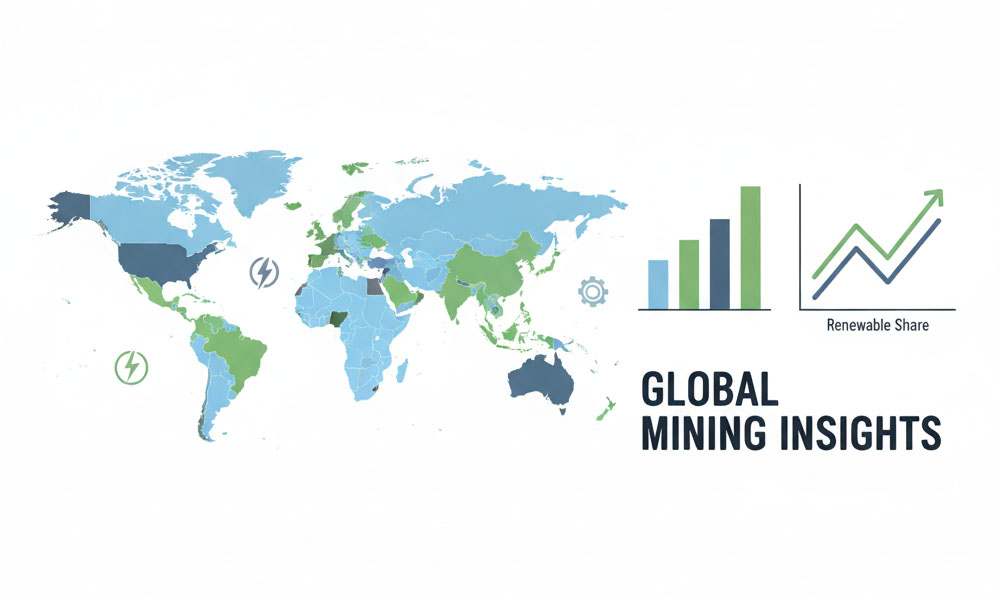
As green crypto mining gains momentum, several companies and regions stand out:
- Publicly-Traded Miners: Mining has attracted institutional investors. In early 2025, 16 crypto mining firms were listed on NASDAQ, up from just 6 in early 2021. Marathon Digital (U.S.) is a leader – it now holds nearly 45,000 Bitcoin (worth ~$4.4 billion) on its balance sheet chainup.com. These big players increasingly tout renewable energy usage to satisfy shareholders.
- Renewable-Powered Mining Companies: Some miners explicitly market themselves as green. For example, Bitfarms powers all its rigs with clean hydroelectric energy, running 3.3 EH/s of hash rate across multiple sites. Hut 8 operates data centers in Canada on a mix of nuclear and hydro power ezblockchain.net. Companies like CleanSpark, Iris Energy, and TeraWulf likewise concentrate their operations where green power is abundant. In fact, a recent industry report profiles Gryphon, CleanSpark, TeraWulf, Iris Energy, and Bitfarms as exemplars that “combine renewable power, transparency, and growth with environmental responsibility” carboncredits.com.
- Innovative Projects: Some miners target unique energy sources. Gryphon Digital Mining claims to be fully carbon-neutral by using flare gas from oil fields. Terawulf runs two major U.S. sites with mostly nuclear and hydro energy; its Lake Mariner site (upgrading to ~238 MW by late 2024) is nearly 100% clean power carboncredits.com. CleanSpark developed modular data centers to capture wasted energy. These players show how mining can be paired with nearly every type of renewable or waste energy.
- Country-Level Initiatives: Nations are also key players. The United States has become a mining powerhouse (especially Texas and the Dakotas), thanks to deregulated power markets and stranded gas opportunities. For instance, Marathon Digital is using excess natural gas (that would otherwise be flared) to generate Bitcoin. In Central America, El Salvador mined about 474 BTC using geothermal energy from its volcanoes, demonstrating large-scale green mining. Oman in the Middle East is capitalizing on unused natural gas too, aiming to seize a big portion of the global Bitcoin hash rate chainup.com. Even a small economy like Bhutan plans to be a green mining hub by vastly expanding its hydro capacity financemagnates.com.
- Global Statistics: The overall trend is clear: mining is global but shifting. A 2024 survey found 52.4% of Bitcoin’s electricity came from “sustainable” sources (42.6% renewable, 9.8% nuclear) jbs.cam.ac.uk. In contrast, coal’s share fell from 36.6% in 2022 to just 8.9% in 2024. Climate-conscious investors are backing this shift too: a market research firm projects the green mining sector (including tech and infrastructure) will grow at ~10% CAGR through 2027 cryptominerbros.com. Additionally, many miners now advertise metrics: for example, Iris Energy operated ~50 EH/s by mid-2025 (mostly hydro and solar) and reported 172% sales growth carboncredits.com. These figures illustrate a maturing, data-driven industry.
Pros of Green Crypto Mining
Lower Carbon Footprint: By using wind, solar, hydro, geothermal or nuclear energy, green mining drastically cuts greenhouse gas emissions compared to coal or gas power. This helps cryptocurrencies address their environmental criticism. For example, a mine powered by solar panels produces essentially zero emissions, unlike a grid miner burning fossil fuel sazmining.com.
Cost Efficiency (Long-Term): Although renewable setups have higher upfront costs, they can dramatically lower ongoing expenses. Traditional grid mining might cost $200–$400 per rig each month in electricity, whereas a solar-powered rig could cut that to under $50. Over 3–5 years, the solar installation can pay for itself. In practice, miners in sunny or windy regions report recovery of costs in as little as 2–3 years sazmining.com.
Grid Stability and Resource Utilization: Green miners can act as flexible loads, smoothing out energy supply. For example, miners can ramp up activity when renewable output is high (e.g. windy nights or sunny days) and power down during lulls, effectively using energy that would otherwise be wasted. Some geothermal or hydro grids actually welcome miners to absorb excess. This was evident in Sichuan, China, where Bitcoin rigs ran heavily during the rainy season.
Positive Public Perception and Investment: Miners that adopt green practices often earn goodwill and new business opportunities. Companies focused on renewables can advertise an “ESG-friendly” profile, attracting environmentally conscious investors and partners. They may also qualify for green bonds or carbon credits. As one analysis notes, sustainable miners “can stand out” in a crowded market, gaining better market access and fewer regulatory hurdles carboncredits.com. Publicly-traded miners now routinely include carbon disclosures in earnings reports.
Long-Term Viability: Finally, green mining can extend the industry’s future. As many blockchains remain proof-of-work (and even PoW coins exist beyond Bitcoin), using cheap, clean energy helps ensure long-term profitability. With block rewards halving (Bitcoin’s mining reward halves periodically), cutting electricity costs is vital for sustaining margins. A green approach helps miners survive through future halving events and stricter energy policies.
Challenges and Considerations
High Upfront Costs: The main downside is the initial investment. Building or leasing renewable power assets, installing solar/wind farms, or securing dedicated hydropower isn’t cheap. A solar setup can cost $10,000–$20,000 per rig for panels, inverters and batteries, versus only $3,000–$8,000 per rig for hardware when hooking to the grid. This means green mining has a longer payback period (often 3–5 years vs 1–2 years for grid mining sazmining.com). It can also involve complex engineering (e.g., designing microgrids or storage). Upfront CAPEX can be a barrier for small miners.
Intermittency and Reliability: Renewable sources fluctuate. Solar and wind are weather-dependent, so miners must solve the downtime problem. Batteries or backup power increase complexity and cost. Without storage, a solar miner goes offline at night, whereas grid power runs 24/7 sazmining.com. Also, grid-connected miners currently benefit from consistent energy supply. Green operations often require hybrid strategies (mixing solar, wind, hydro, and even nuclear or biogas) to ensure steady power. In practice, miners in regions with stable, abundant renewables (like Quebec’s hydro or Utah’s wind) have an advantage.
Regulatory Uncertainty: Ironically, even green miners face legal hurdles. Many jurisdictions are scrutinizing or banning crypto mining outright to preserve power or meet climate goals. For example, Angola criminalized crypto mining in 2024 to protect its electrical grid, and Kosovo outlawed it in 2022 during an energy crisis greenpeace.org. In 2025, Russia banned mining in 10 regions to conserve energy resources financemagnates.com. Even in developed markets, new regulations are looming (for instance, Europe debated bans on energy-intensive mining chainup.com). Navigating these rules is a challenge: green miners still need licenses, permits, and must often comply with strict reporting. Unexpected moratoriums or taxes (as seen in Sweden and some Canadian provinces greenpeace.org) can upend plans.
Grid and Community Impact: Using limited renewable capacity isn’t always welcomed. In some cases, local authorities or utilities have pushed back on mining despite clean power. For example, Iceland’s power company began denying new mining requests in 2021 to prioritize residents greenpeace.org. Similarly, when miners cluster near hydro dams or wind farms, they may compete with other users for bandwidth or face community opposition (noise, land use). Miners must carefully manage these social impacts to maintain their “green” status.
Technology and Supply Chains: Green mining often relies on cutting-edge equipment (like the most efficient ASICs) and infrastructure (immersion cooling, smart grids). These technologies can be costlier or harder to source. The industry also faces occasional hardware shortages. In addition, moving a mining operation to remote renewable sites can entail building new roads, data links, and so on. All of this adds logistical hurdles.
Market Risks: Lastly, cryptocurrency prices and mining difficulty remain volatile. A green mining venture might rely on current crypto prices to justify expensive setups. If prices crash or network difficulty spikes (as happened after Bitcoin’s 2024 halving chainup.com), profit margins can shrink. Unlike fossil-fueled miners who can sometimes outlast crashes on cheap power, new green miners must be resilient against market swings.
Conclusion
Green crypto mining is transforming the crypto landscape. By blending cutting-edge tech with clean power, miners are reducing emissions and future-proofing their operations. We encourage you to keep this conversation going: share your thoughts in the comments and let us know your view on the future of sustainable mining. For more insights, explore our articles Proof of Work vs Proof of Stake, Guide to Bitcoin Bridge and Crypto Staking and subscribe for updates. Together, we can watch how the crypto world evolves – hopefully toward a greener future!