

Imagine a world where your money isn’t in banks, but in code; where borders are irrelevant, and trust isn’t placed in institutions—instead, it’s embedded in math. This isn’t sci-fi, in fact, it’s the world Bitcoin is accelerating us toward.
Bitcoin was introduced in 2009 by a mysterious figure (or group) using the name Satoshi Nakamoto. To this day, remarkably, no one knows their true identity. Furthermore, Nakamoto’s brilliance lay not just in coding, but specifically in combining cryptography, economics, and game theory into a system that could operate without central authority. As stated in the original whitepaper, Bitcoin was designed as a peer-to-peer electronic cash system, ultimately, a bold challenge to traditional finance.
Since then, Bitcoin has gone from a fringe experiment on online forums to a global force reshaping how we think of money, value, and control. Now, in 2025, as it hits new all-time highs, more eyes than ever are asking: are we entering a full-blown era of digital currency?
Therefore, in this post, we’ll trace where Bitcoin has been, where it is today, and where it might go—by pulling from fresh data, expert forecasts, and some personal reflections. So, if you’ve wondered what all the hype is really about (beyond price charts), you’re in the right place.
Traditional Money vs Bitcoin
To understand why Bitcoin matters, it is useful to compare it with traditional money (fiat), since this comparison helps illuminate both its strengths and weaknesses.
| Feature | Traditional Fiat Currency | Bitcoin |
|---|---|---|
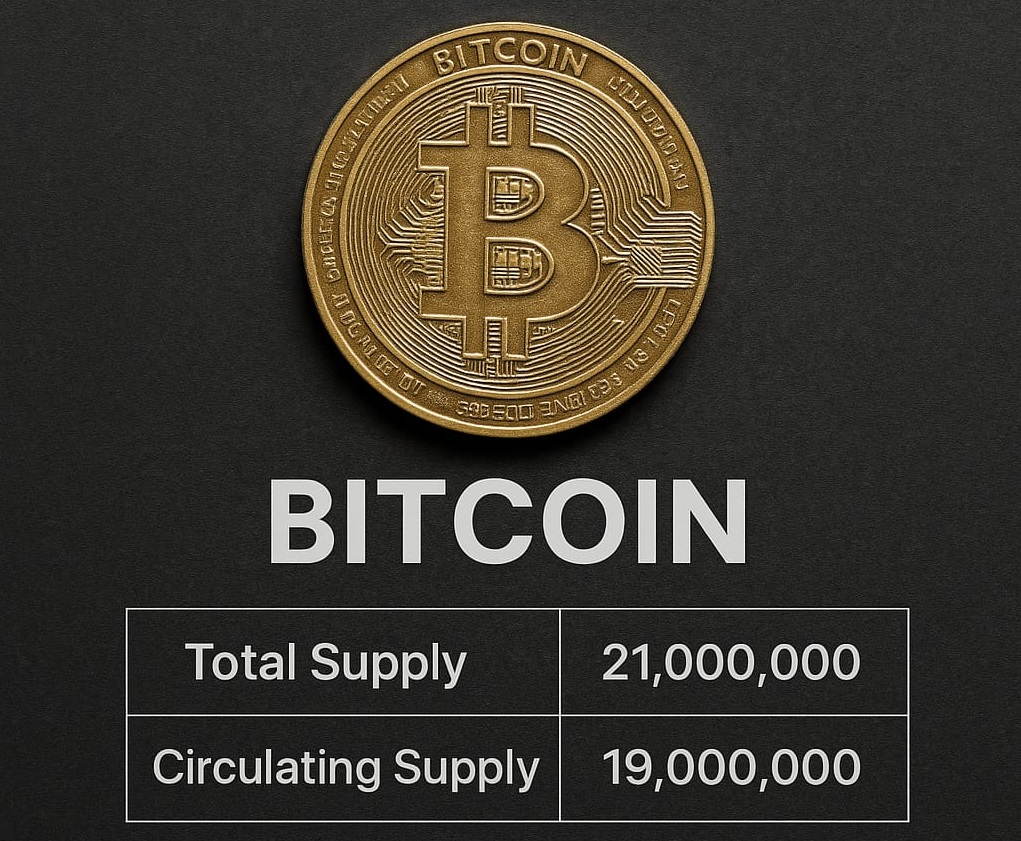
| Centralization & Control | Issued & regulated by central banks; monetary policy tools (interest rates, printing) controlled by governments. | Decentralized protocol; fixed supply cap (21 million BTC), issuance via halving events. |
| Transparency & Trust | Relies on institutions; opaque in many cases (e.g. secret bailouts, undisclosed collaterals). | Blockchain ledger is public; every transaction traceable, though pseudonymous. |
| Inflation & Supply | Fiat can be inflated via printing, leading to devaluation (depending on policy). | Supply schedule predetermined; inflation rate declining over time via programmed halving. |
| Speed & Access | Varies widely; often slow across borders; requires intermediaries. | Near-instant in many cases; permissionless; borderless. But scaling & fees are still issues. |
| Regulation & Legal Support | Well-established frameworks; legal tender status; consumer protections etc. | Regulatory environment is evolving; legal status differs by country; risks of bans or strict regulation. |
| Volatility & Speculation | Relatively stable (at least major currencies); used daily. | Highly volatile; much adoption so far is speculative or investment-oriented. |
Key Insights: What’s New & What’s Driving the Era of Bitcoin
Here are the fresh developments and insights as of mid-2025 and beyond—things that many posts haven’t fully tied together.
1. Institutional Adoption & Corporate Reserves
Companies are not just talking—they are buying. MicroStrategy (now rebranded “Strategy”) has made Bitcoin its treasury asset, accumulating about 499,096 BTC, worth tens of billions. MarketWatch And this isn’t unique to one firm; dozens of public companies are holding BTC and integrating its value dynamics into their financial strategies. CoinLaw
This brings several implications:
- Corporate balance sheets now are influenced by Bitcoin’s volatility and regulatory risk. arXiv
- The correlation between Bitcoin and traditional equity markets is rising. Once an ‘alternative’ asset, Bitcoin now increasingly moves in sync with traditional markets, especially around macro-events. This affects how portfolios get diversified. arXiv
2. Regulatory Shifts & Government Involvement
Regulation is no longer just a threat—it’s becoming a defining factor of Bitcoin’s trajectory.
- U.S. regulatory developments under recent administrations have included proposals for a strategic crypto reserve and moves to include Bitcoin in retirement accounts (e.g. 401(k)s). Barron’s, Wikipedia
- Some states (like Texas) are passing laws to hold Bitcoin reserves. Wikipedia
Regulatory clarity is a double-edged sword: good for reducing uncertainty, but as many experts warn, policy missteps (or bans) remain a risk. Bitpanda
3. Price Records, Volatility & Forecasts
Bitcoin continues to break records.
- In August 2025, BTC breached $124,000, reaching new all-time highs. Reuters
- Forecasts depend heavily on what assumptions you make—interest rates, regulatory clarity, macroeconomic stability, mass adoption. Panels of experts project end-of-year 2025 averages anywhere from $145,000 to $200,000+, though with broad ranges. Capital.com
- Some expect sideways movement in the nearer term (e.g. $90,000-$100,000 range) if regulatory or macro pressures tighten. Bitpanda
4. Bitcoin Adoption & Public Sentiment
Data suggests Bitcoin is not just for “techies” anymore.
- In the U.S., about 28% of adults own cryptocurrency in 2025; of those without, many plan to buy. Of the three top picks people want, Bitcoin is usually #1. Security.org
- Globally, hundreds of millions own or use cryptocurrency, though rates and uses differ widely by geography. Triple-A
5. Key Risks That Might Shape Bitcoin’s Next Few Years
Bitcoin’s era isn’t guaranteed; several headwinds matter.
- Regulatory risk: crackdown, taxation, legal status could swing markets.
- Technical & security risks: quantum computing looms as a threat to classical cryptographic protections. Barron’s
- Environmental & energy concerns: mining’s carbon footprints and high energy use remain contentious.
- Volatility & perception: we’ve seen repeated “bubble popped” headlines; public trust is still fragile.
- Geopolitical risks: governments may decide to ban or restrict, or use Bitcoin for strategic rather than economic ends.
Personal Reflection: What Stands Out to Me
I’ve followed Bitcoin since the mid-2010s, more intimately during bull cycles and downturns. Based on that experience, here are some reflections:
- The emotional distance between speculation and genuine belief in Bitcoin’s potentials is shrinking. In earlier years, many simply saw Bitcoin as a get-rich instrument; now a larger group sees it as infrastructure—digital gold, reserve asset, or hedge. That changes how people hold, how long they hold.
- Watching corporate treasuries hoard BTC took me by surprise—especially how they manage risk. It’s no longer about “how much can I make tomorrow,” but “how does holding this change my balance sheet risk and opportunity over years, even decades.”
- On community and culture: Bitcoin’s user base in countries with volatile fiat currencies (inflation, devaluation) is growing in purposeful ways—not just as investment, but as hedge, as store of value, or even replacement of unreliable local currency.
- On technical side: scaling (transaction speed, fees) still frustrates many. Layer 2s (Lightning, etc.) are promising, but until they’re massively accessible, friction remains for everyday use.
What’s Next for Bitcoin: Scenarios, Forecasts & Strategy
Let’s talk forward. Below are plausible scenarios and some strategic questions to consider.
Scenario A: Accelerated Adoption & Regulatory Clarity
If governments provide clearer regulation (not necessarily “friendly,” but consistent), and if institutions continue to buy, Bitcoin could:
- Surge toward $200,000+ in near term (1-2 years). Capital.com
- Be held by more nations as part of sovereign reserves.
- Become incorporated more deeply in global payments, especially cross-border remittances, or as hedge assets in emerging markets.
Scenario B: Bitcoin’s Slow Climb with Corrections
Under this scenario:
- Bitcoin trades in a wide range ($90,000 to $150,000), with frequent corrections. Bitpanda
- Regulatory uncertainty or macro risks (inflation, rates) keep retail adoption cautious.
- Institutions make careful, conservative decisions; adoption grows but incrementally.
Scenario C: Regulatory Push-Back & Disruption
Here things get tighter:
- Some nations impose restrictions: capital controls, taxing, or even bans.
- Technological disruptions (e.g. quantum computing, security flaws) cause trust erosion.
- Competing digital currencies (CBDCs, government-backed stablecoins, or other decentralized cryptos) challenge Bitcoin’s dominance.
Bitcoin: Strategic Takeaways
If you’re someone interested in Bitcoin—whether as an investor, technologist, policymaker, or ordinary user—then these are the things to watch and, more importantly, to consider:
- Diversify risk: don’t bet everything on one outcome. BTC is volatile; regulatory headwinds can come from unexpected directions.
- Follow regulation closely: For many, this is the most immediate lever. A mild regulatory shift in a major economy (US, EU, China) can ripple globally.
- Consider holding horizon: The longer one plans to hold, the more the “infrastructure value” aspects matter (reserve store, hedge, trustless tech) vs. short-term price speculation.
- Keep an eye on alternative infrastructure: Lightning Network, Layer-2 scaling, wallet usability, energy-efficient mining, etc. These affect usability and candidate adoption.
Conclusion
Bitcoin isn’t just a speculative asset anymore; in fact, it’s increasingly a pillar in the emerging era of digital currency. Moreover, thanks to its fixed supply, growing institutional embrace, evolving regulation, and global user adoption, we’re collectively moving past the phase of ‘just debate’ and instead into a phase of ‘real-world integration.
Nevertheless, that doesn’t mean the path ahead is smooth. In reality, significant hurdles like volatility, ongoing regulatory risks, technical challenges, and complex geopolitical dynamics remain very real and could create substantial volatility.
However, for those willing to actively engage—to learn, adapt, and think long-term—Bitcoin offers more than just trading profits. Ultimately, it presents a vision of a reimagined financial architecture; one where trust is engineered, borders matter less, and ownership of value becomes more accessible and democratic.
What do you think?
- If you’ve followed Bitcoin, I’m curious: has your view changed in recent years? More importantly, what aspects make you excited—or skeptical?
- Looking ahead, if you want to dig deeper, in the coming weeks I’ll be writing follow-ups on key topics such as Bitcoin’s role in emerging economies, its technical scalability, and, moreover, comparisons between Bitcoin vs Gold. Subscribe or share so that you don’t miss those.
- Also: share this post with someone who still thinks Bitcoin is just “a fad”—let’s open a better conversation about what’s really going on.
- Please be sure to visit our other posts. (US Bitcoin ETFs, Future of Crypto Currency, Blockchain and Top 10 Altcoins)



Pingback: Layer 1 vs Layer 2 Crypto: Beginner’s Guide to Blockchain Scaling - tokensbuzz.com
Pingback: Cryptocurrency Investment Strategy Beginner’s Guide - Start Smart - tokensbuzz.com
Pingback: Today's Crypto Crash Explained: Bitcoin and Altcoins Plunge - tokensbuzz.com
Pingback: Largest Crypto Crash: Markets Plunged, ~$19B Liquidated - tokensbuzz.com
Pingback: Why Institutions Investing in Crypto like Bitcoin and Ethereum - tokensbuzz.com
Pingback: Is Crypto a Good Hedge Against Inflation? (2025 Analysis) - tokensbuzz.com
Pingback: The Future of Crypto Currency: Trends, Regulations & Challenges - tokensbuzz.com
Pingback: Geopolitics and Crypto Prices: How Global Events Move Bitcoin - tokensbuzz.com
Pingback: Bitcoin Halving Explained: What It Means for Investors (2025) - tokensbuzz.com
Pingback: Michael Saylor – From Tech CEO to Bitcoin Evangelist - tokensbuzz.com
Pingback: Satoshi Nakamoto: Unmasking Bitcoin’s Creator & Identity Theories - tokensbuzz.com
Pingback: Vitalik Buterin: Ethereum Founder – Innovations & Net Worth - tokensbuzz.com
Pingback: Crypto Mining: Environmental Impact & Green Solutions - tokensbuzz.com
Pingback: Bitcoin Price Prediction for 2026: Will It Hit $200K? - tokensbuzz.com
Pingback: US Government Shutdown Ends: What It Means for Crypto - tokensbuzz.com
Pingback: What are Privacy Coins? Top 5 Privacy Tokens - tokensbuzz.com
Pingback: Bitcoin vs Gold: Which Asset is a Better Store of Value? - tokensbuzz.com
Pingback: US Bitcoin ETFs 2025: Complete Guide for Crypto Investors - tokensbuzz.com
Pingback: Solana Price Prediction 2026: Expert Forecasts & Analysis - tokensbuzz.com
Pingback: 5 Top BTC to ETH Bridges (2026): Fees, Speed & Safety - tokensbuzz.com
Pingback: How to Buy Bitcoin: Step-by-Step Guide for Beginners - tokensbuzz.com