


The Bitcoin Halving is a pivotal event in the crypto cycle – happening roughly every four years – that slashes the reward miners receive for validating blocks by 50%. By design, this event steadily decreases the number of new bitcoins entering circulation, boosting scarcity and mimicking the supply profile of assets like gold investopedia.com. For investors and enthusiasts, each halving is more than a technicality; it’s a market catalyst often followed by bull runs. As one CEO put it, “Bitcoin mining is a very bad business. Every four years, the Bitcoin halving compresses profit margins by about 50%”. In practice, halving’s have historically signaled major shifts: after the 2012, 2016, 2020 and 2024 halving’s, Bitcoin entered spectacular rallies in 2013, 2017, 2021 and now 2025 tokenmetrics.com. With the next halving expected in 2028 coinledger.io, understanding this cycle is crucial for anyone with Bitcoin on their radar.
A Bitcoin halving cuts miner rewards in half, effectively slowing the creation of new bitcoins. This programmed scarcity helps explain why Bitcoin is often compared to digital gold investopedia.com.
Bitcoin halving’s follow a scheduled cycle hardwired into the blockchain. Every 210,000 blocks (approximately four years), the protocol halves the “Coinbase” reward paid to miners. The very first block reward was 50 BTC, which fell to 25 BTC in late 2012, then to 12.5 BTC in 2016, to 6.25 BTC in 2020, and most recently to 3.125 BTC on April 20, 2024, coinledger.io. By mid-2028, the block reward will drop again to 1.5625 BTC investopedia.com. This pre-programmed halving schedule ensures Bitcoin’s maximum supply stays capped at 21 million coins. Each halving event is thus not a surprise but a known milestone, allowing investors and miners to prepare.
How Bitcoin Halving Works
Bitcoin’s Proof-of-Work mechanism rewards miners with new coins for securing transactions. When a halving occurs, miners suddenly earn half as many BTC for solving each block, effectively raising the effort (and cost) per bitcoin. In economic terms, this halves the inflation rate of Bitcoin’s supply. As Investopedia notes, “Bitcoin halving refers to an event that takes place about every four years and reduces the block reward by 50%,” which “increases scarcity and can act to raise its price if market conditions remain the same” investopedia.com.
After a halving:
- Supply Shock: New Bitcoin issuance drops sharply. With fewer coins entering the market, supply-tightening tends to push prices upward if demand stays steady or grows tokenmetrics.com.
- Miner Economics: Lower rewards mean mining becomes less profitable unless the price rises. Smaller or inefficient miners may exit, while the network hashrate can temporarily dip until difficulty adjusts. Over time, only the most competitive operations survive. As Sam Tabar (Bit Digital CEO) warned, without significant price gains “halving compresses profit margins by about 50%” and forces consolidation bitget.com.
- Investor Behavior: Anticipating these changes, savvy investors often buy or hold Bitcoin ahead of a halving, expecting a supply-driven rally. Past patterns make halvings a focal point for market timing.
Historical Impact on Bitcoin’s Price
Looking back, halving’s have repeatedly coincided with Bitcoin bull markets. Each past cycle saw Bitcoin set new all-time highs about 6–18 months after the halving tokenmetrics.com. For example:
| Halving Date | Reward After | Approx. Price at Halving | Peak Price ~1 Year Later |
|---|---|---|---|
| Nov 28, 2012 | 50 ➔ 25 BTC | ~$12 | ~$1,000 by Nov 2013 (≈+8,000%) |
| Jul 9, 2016 | 25 ➔ 12.5 BTC | ~$650 | ~$19,000 by Dec 2017 (≈+2,800%) |
| May 11, 2020 | 12.5 ➔ 6.25 BTC | ~$8,800 | ~$64,000 by Apr 2021 (≈+627%) |
| Apr 20, 2024 | 6.25 ➔ 3.125 BTC | ~$30,000 | ~$69,000 by Nov 2024 (≈+130%) |
Table: Key Bitcoin halving’s and subsequent price moves. Historical cycles show strong gains after each halving, though past performance isn’t a guarantee of future result investopedia.com.
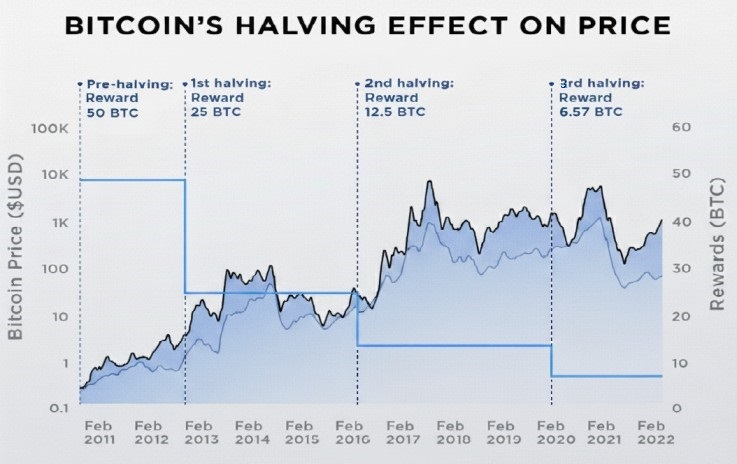
These surges align with simple supply-demand economics: halving reduces the flow of new BTC by half, so if interest (demand) increases or even stays flat, prices tend to rise. However, nuance matters. The 2024 halving occurred under unique conditions: the launch of Bitcoin spot ETFs and shifting market sentiment. Surprisingly, Bitcoin’s price briefly dipped in the weeks after April 2024 before embarking on a new high coinledger.io. This shows that while halving’s set the stage for scarcity, short-term price action can vary. As CoinLedger notes, “In the past, Bitcoin halving’s have led to increases in the price of BTC,” but other factors (regulatory news, macro trends, investor sentiment) also play a role coinledger.io.
Financial historian analysis confirms that the “four-year cycle” around halvings has been an important market rhythm. Some crypto experts argue this cycle may be evolving. For instance, Bitwise CIO Matt Hougan observed recently that the classic four-year beat “no longer holds the same sway” for Bitcoin’s price cryptomus.com, pointing out that institutional investment and changing market structure dilute halving’s impact. Pierre Rochard (The Bitcoin Bond Company) similarly notes that with over 95% of all BTC already mined, each halving “no longer meaningfully affect[s] the supply” cryptomus.com. Still, many investors and analysts treat halving’s as semi-reliable catalysts for the crypto markets, even as the industry matures. As one crypto analyst put it, despite new factors, halving events “continue to affect long-term market behavior” and remain fundamental to Bitcoin’s economic model cryptomus.com.
Halving’s Impact on Miners and the Network
For miners, a halving is a stress test. With rewards cut in half, miners must rely on higher Bitcoin prices or greater efficiency to stay profitable. This often leads to:
- Consolidation and Shutdowns: Smaller miners or older equipment get priced out. We saw Bitcoin’s hash rate momentarily dip after past halvings before rebounding at higher difficulty. Richer operations with cheap electricity and up-to-date rigs can endure longer.
- Technology Upgrades: To cope, mining firms reinvest in faster, energy-efficient hardware. Marathon Digital, for example, massively expanded its hashpower ahead of the 2024 halving, anticipating tougher margins investopedia.com.
- Energy Efficiency: As Marathon’s CEO put it, halving “drives miners to be more energy-efficient” overall. The race is on to lower costs per coin, which can accelerate innovation in mining tech.
Ultimately, halving’s strengthen the network by trimming unprofitable participants and capping new supply. Over decades, this gradual drop in new issuance is intended to align Bitcoin’s inflation rate more closely with those of fiat currencies like the US dollar investopedia.com.
How Should Investors Respond to Halving?
For Bitcoin investors, a halving can feel like an early warning of opportunity. Typical strategies include:
- Accumulate Beforehand: Many choose to buy in the 6–12 months leading up to a halving, aiming to ride any price gains that start as hype and fundamental scarcity begin to kick in. Historical data suggests this often pays off, but not always.
- Diversify into Altcoins: During the next bull phase, altcoins often amplify Bitcoin’s move. Some traders sell a portion of BTC into altcoins post-halving. Tokens linked to DeFi, AI, and emerging sectors have sometimes outperformed after Bitcoin peaks tokenmetrics.com. (For deeper insight, see our Altcoin Picks & Insights 2025 coverage.)
- Set Alerts and Manage Risk: It’s smart to use stop-loss orders or technical signals. AI-driven platforms and on-chain analytics (for example, Token Metrics) can help spot overbought conditions or emerging trends.
- Think Long-Term: Despite the hype cycles, Bitcoin’s design is long horizon. A seasoned tip is not to “FOMO-in” at the peak. Instead, many experts advocate dollar-cost averaging and holding through volatility, especially given the unpredictable macro backdrop coinledger.io.
In short, halving events matter because they change Bitcoin’s economics and market psychology. But investors should remember that nothing is guaranteed. As Investopedia cautions, while prices “trended upward” after past halving’s, future outcomes remain speculative investopedia.com. Every cycle is unique, and factors like regulations or global economies could diverge from history.
AI, Blockchain, and the Future of Crypto
The conversation around halving’s increasingly overlaps with two buzzwords: AI and Blockchain innovation. Industry leaders stress that AI will play a central role in crypto’s future. Sam Tabar (CEO of Bit Digital and an AI firm) notes bluntly: “The future depends on AI and Ethereum” bitget.com. In practice, this means:

- AI Trading & Analysis: Machine learning models are now used to predict crypto price moves, optimize portfolios, and even execute trades. Halving cycles generate vast data, and AI tools help parse this historical and on-chain information for investment insights. For example, Tensor-based algorithms might detect subtle signals in mining data or social sentiment around a halving event.
- AI-Focused Tokens: New crypto projects aim to build decentralized AI infrastructure (compute power, data marketplaces, etc.). According to a Kraken survey, nearly half of crypto holders are optimistic about AI tokens’ future potential kraken.com. The synergy of blockchain and AI is spawning tokens that could themselves be major “altcoins” in coming cycles. (See Kraken’s survey “AI Tokens” for details.)
- Smart Contracts & Decentralized AI: The maturation of Ethereum and similar platforms (often touted as “world computers”) is enabling on-chain AI oracles and data. Experts argue that as on-chain AI grows, it will also impact how protocols allocate resources – possibly even how block rewards are budgeted in multi-chain ecosystems.
From a pricing perspective, the rise of AI doesn’t alter Bitcoin’s halving schedule, but it could reshape demand. If global industries continue to integrate AI (from finance to healthcare), Bitcoin – as a leading crypto and digital collateral – might attract new investors who trust in tech. The broader point: Bitcoin’s scarcity story may now be buttressed by an emerging class of AI-native investors and applications.
Saving and investing strategies will likely evolve. For instance, many now stash gains not in cash but in diversified crypto portfolios. Half the respondents in a recent survey plan to invest in AI-focused crypto tokens kraken.com, reflecting how the rise of blockchain-based AI projects is reshaping investment behavior.
Looking Ahead: Next Halving and Takeaways
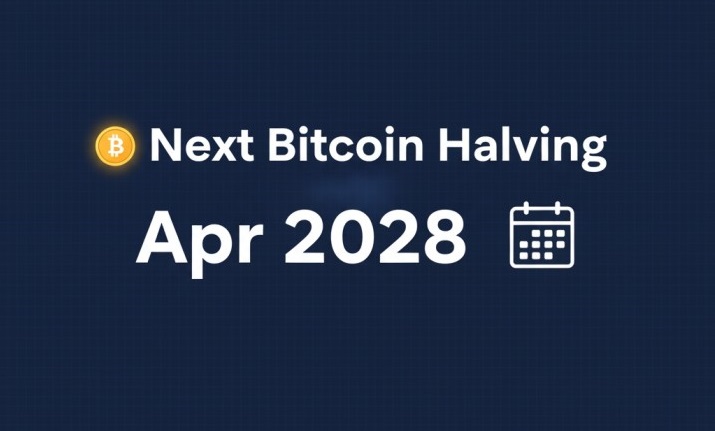
When is the next halving? Based on Bitcoin’s block schedule, the next halving is projected for around April 2028 coinledger.io. At that time, block rewards will drop from 3.125 BTC to about 1.5625 BTC. By then, roughly 20.8 million BTC will have been mined out of the 21 million total supply. In other words, each halving event carries us closer to Bitcoin’s monetary “hard cap.”
For investors, the continued four-year rhythm means halving dates are predictable signposts. Many traders now mark their calendars and plan strategies in advance. The consensus advice is prepare, but don’t panic: use the halving as a chance to review your portfolio, rebalance if needed, and stay informed. As TokenMetrics observes, the halving “creates market cycles,” but profiting from them usually requires data-driven timing and discipline tokenmetrics.com.
Key Insights:
Scarcity Boost: Every halving cuts new Bitcoin issuance in half investopedia.com. This engineered scarcity tends to support price in the long run, though short-term volatility is possible.
Historical Pattern: Past halvings were followed by multi-fold price rallies (e.g. 2012→2013, 2016→2017, 2020→2021, 2024→2025) tokenmetrics.com. However, with institutional money and new tech (like AI/ETF integration), future cycles might differ in shape and timing.
Mining Profitability: Miners face squeezed margins at each halving bitget.com. Look for industry consolidation and technological innovation in the wake of halving’s.
Investment Strategy: Savvy investors consider both Bitcoin and leading altcoins. After each halving, historical data suggests rotating some gains into high-potential altcoins can pay off tokenmetrics.com. Diversification and risk management remain crucial.
AI in Crypto: Blockchain and AI are converging. A significant portion of crypto users now view AI-driven tokens as a major trend kraken.com. This could change the market landscape, creating new winners beyond Bitcoin.
Conclusion
Bitcoin’s halving events are a foundational piece of its economic model, symbolizing Bitcoin’s fixed supply ethos. While “past performance is not indicative of future results,” understanding halving’s helps investors gauge the long game. Each halving heightens scarcity, fuels narratives about Bitcoin as “digital gold,” and often brings renewed public attention. Combined with rapid advances in blockchain and AI, these cycles promise to make the cryptocurrency space even more dynamic.
👉 What do you think? Will Bitcoin follow its historical pattern after the next halving? How do you see AI’s role in shaping crypto’s future? Share your thoughts below and check out more insights on TokensBuzz – from Altcoin picks to crypto crash analysis – as we all navigate the exciting road ahead.



Pingback: Essential Crypto Terms: DeFi, NFT, Gas, and Halving Explained - tokensbuzz.com
Pingback: Bitcoin Price Prediction for 2026: Will It Hit $200K? - tokensbuzz.com