
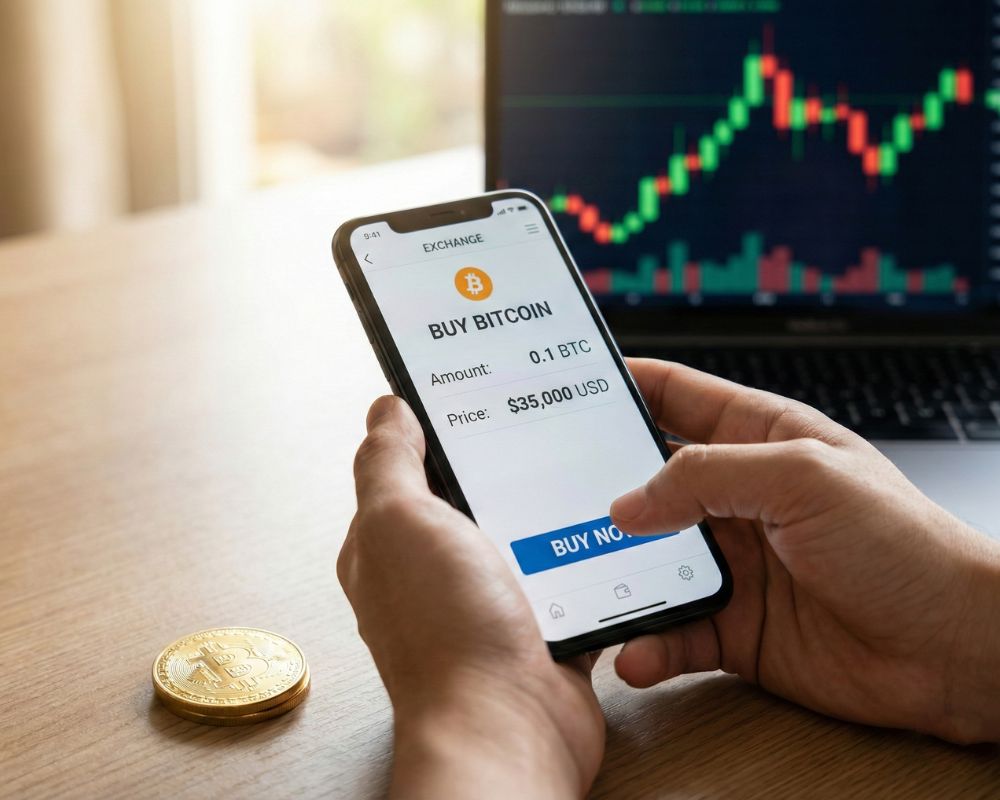

Buying Bitcoin may sound complex at first, but with the right steps, any beginner can do it confidently. Bitcoin has surged from a niche idea to a mainstream asset, so millions want to know how to buy Bitcoin safely. In this guide we walk through the process step-by-step: choosing a reputable exchange, funding your account, placing your order, and securing your BTC. We also cover where to buy crypto safely (top exchanges), alternative purchase methods, and tips from experts. Remember that Bitcoin is volatile (it ranged ~$75K–$124K in 2025 nerdwallet.com), so only invest what you can afford to lose. Let’s get started!
Step 1: Choose a Reputable Exchange or Platform
First, pick a trusted cryptocurrency exchange or platform. For most beginners, a centralized exchange (CEX) like Coinbase or Kraken is the easiest way to buy Bitcoin nerdwallet.com. These platforms are run by companies and hold your funds in their wallets. (By contrast, decentralized exchanges (DEXs) like Uniswap let you trade peer-to-peer without an intermediary tokensbuzz.com.) Britannica describes CEXs as “easiest to use, but perhaps least secure”. In practice, CEXs have simple interfaces, fast fiat on-ramps, and customer support — ideal for newcomers. We recommend choosing a well-known, regulated CEX with strong security measures (2FA, cold storage, insurance) blockchain-council.org.
- Regulation & Reputation: Use an exchange registered in your country. For example, Coinbase is licensed in the U.S., and Kraken is known for security worldwide tokensbuzz.com.
- Security Features: Look for two-factor authentication, cold storage, and even insurance on deposits. The Blockchain Council advises that “the safest way to buy crypto is through a trusted exchange…with clear security measures like…two-factor authentication and insurance” blockchain-council.org.
- Payment Options: Good exchanges support your local fiat. Coinbase and Kraken let you link bank accounts or cards. Some platforms also allow PayPal or Apple Pay.
- User Experience: Beginners benefit from simple interfaces and tutorials. Exchanges like Coinbase and Gemini provide in-app guides and customer support.
Popular beginner-friendly exchanges include Coinbase, Binance, Kraken, and Gemini. Coinbase, for example, has over 100 million users and even carries crime insurance for a portion of funds businessinsider.com. Kraken is praised for security, and Binance offers a vast crypto selection. (A deeper list of top platforms can be found in our article Best Crypto Exchanges guide.) Always check reviews and start small: maybe create accounts on two exchanges, verify them, and explore their dashboards before committing funds.
Step 2: Create and Verify Your Account
Once you’ve chosen an exchange, sign up and complete verification. This typically involves providing your email or phone number and creating a strong password. Then you’ll verify your identity (KYC). This is normal – just like a bank or stockbroker requires ID investopedia.com. Expect to upload a government ID and proof of address. Some exchanges let you buy very small amounts without KYC, but for larger purchases you’ll need full verification.
Security Tip: Use two-factor authentication (2FA) on your account immediately investopedia.com. Create a long, unique password and consider a password manager. Enable email/SMS alerts and review security guides from the exchange. This way, only you can approve logins or withdrawals.
After verification, your account is ready. Check the deposit limits and supported payment methods. Many exchanges also offer mobile apps – feel free to install and familiarize yourself there.
Step 3: Fund Your Account (Deposit Fiat or Crypto)
Next, deposit money into your account. Most beginners will deposit government fiat currency (USD, EUR, etc.) before buying Bitcoin. Common funding options include:
- Bank Transfer (ACH, SEPA, wire): Linking your bank account to the exchange is often cheapest (low fees) but can take a couple of days. This is ideal for larger amounts.
- Debit/Credit Card: Allows instant purchases with your card balance. Convenient but beware of higher fees (2–4%). Credit cards may charge cash-advance fees. Some banks may block crypto-related transactions, so check with your bank if needed investopedia.com.
- Payment Apps: Services like Cash App, PayPal, or Venmo (in countries where supported) let you buy crypto directly. They are very user-friendly but may have limits or small fees. For example, PayPal lets U.S. users buy Bitcoin directly in the app investopedia.com.
- Transfer Crypto: If you already own cryptocurrency in another wallet or exchange, you can transfer it in and trade for BTC. This avoids fiat on-ramp fees.
Each exchange shows the fees for each deposit method. For instance, bank transfers often cost <$1, while card purchases incur a percentage fee. Be sure to complete any additional account linking (like verifying your bank) and wait for the funds to arrive in your exchange wallet. This funding step is necessary before placing any buy order.
Step 4: Place Your Bitcoin Order
With funds in your account, you’re ready to buy Bitcoin. Go to the “Buy/Sell” or “Trade” section of the exchange, select Bitcoin (BTC), and decide how much you want. There are two main order types:
- Market Order: Buys immediately at the current market price. Fast and easy for beginners.
- Limit Order: You specify a price at which to buy; the order fills if the market reaches that price. Useful if you want to wait for a dip, but more advanced.
For most first purchases, a market order is simplest. Just enter the dollar amount (or fraction of a Bitcoin) you want to spend and confirm the transaction. The exchange will show the fee and final BTC amount.
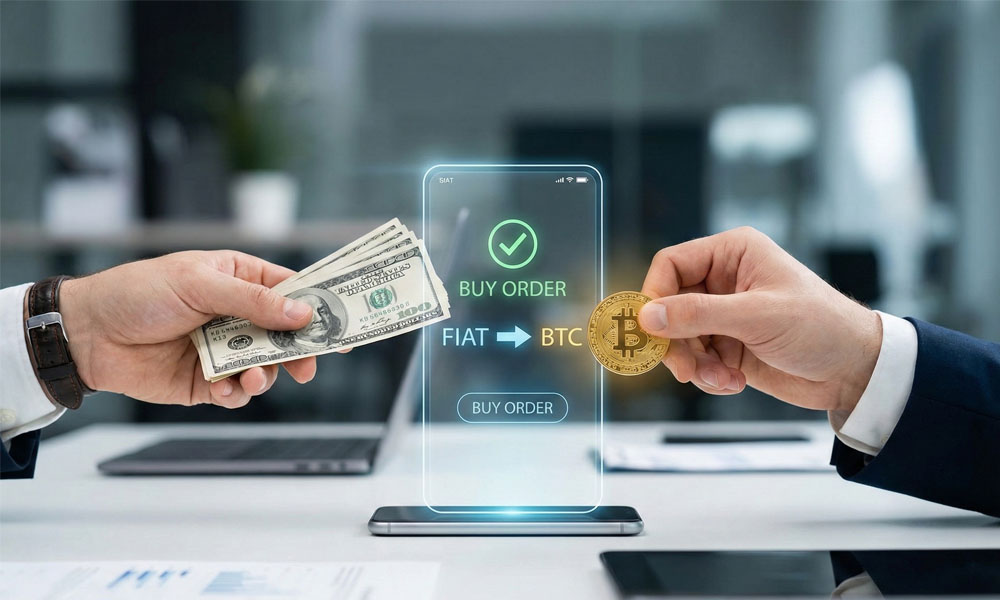
After confirming the trade, you should see your Bitcoin balance in your exchange wallet. Some platforms also let you set up recurring buys (e.g. weekly) to dollar-cost-average over time. This is a strategy many beginners use to smooth out volatility. Once your order executes, take a screenshot or note the transaction ID. Congratulations – you now own Bitcoin!
Step 5: Secure Your Bitcoin
Now that you’ve purchased Bitcoin, safeguarding it is crucial. By default, your BTC resides in a custodial wallet on the exchange (they hold the private keys). For larger or long-term holdings, it’s safest to move your Bitcoin into a private wallet where you control the keys.
- Software Wallets: These are apps on your phone or computer (e.g. Exodus, Electrum, Mycelium). They’re free and easy for small amounts or active trading.
- Hardware Wallets (Cold Storage): Devices like Ledger or Trezor store your keys offline. The Blockchain Council notes that hardware wallets (cold storage) are the most secure choice for long-term crypto holdings blockchain-council.org. If you bought $100-$200 worth of BTC, a hardware wallet could be worth the investment.
- Paper Wallets: A printed copy of your private keys. Generally obsolete due to phishing risks.
- Custodial vs Non-Custodial: Keeping crypto in the exchange (custodial) means you trust their security. “Not your keys, not your coins” is a mantra – if an exchange is hacked, funds can be lost. By using a non-custodial wallet, you hold the private keys. This adds responsibility: if you lose your seed phrase, you lose your crypto.
Expert Tip: Always enable withdrawal whitelist (if offered) and never share your keys. Treat your wallet like a bank – keep backups of your seed phrase in a safe place.
Other Ways to Buy Bitcoin Safely
Aside from exchanges, there are alternative methods:
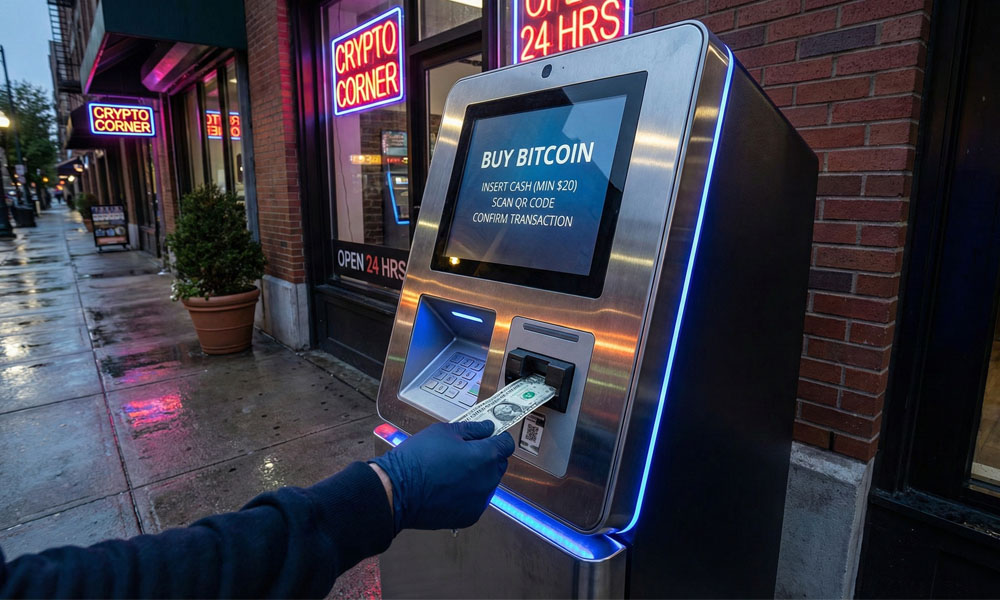
- Bitcoin ATMs: These kiosks let you buy BTC with cash or card. As of Jan 2024, there were over 34,000 Bitcoin ATMs worldwide businessinsider.com. They are convenient if you prefer cash, but fees are high (often 10–15% of the purchase). Expect to show ID for larger buys.
- Peer-to-Peer (P2P) Marketplaces: Platforms like Binance P2P, Paxful, or LocalBitcoins connect buyers and sellers directly. You can choose payment methods and counterparty ratings. P2P trades use escrow to protect both sides. This method can be safe if you stick to high-rated traders, but always be cautious and trade small amounts when testing it out.
- Payment Apps: Apps like Cash App (US) and PayPal (in some regions) allow instant small Bitcoin purchases. For example, Cash App lets users buy and hold BTC, and PayPal now lets U.S. users buy four cryptocurrencies directly. Fees vary, and you usually can only withdraw to approved wallets (or in CashApp’s case, sell back to USD).
- Gift Cards or Vouchers: Some people use gift cards to buy Bitcoin on services like Paxful. This is generally more complicated and riskier, so it’s not recommended for beginners.
Each method has trade-offs of cost, speed, and privacy. For a beginner, sticking to reputable exchanges and wallet apps is the safest.
Tips for Your First Crypto Purchase
- Start Small: Treat your first buy as a learning experience. Many experts advise beginning with a modest sum (often $50–$100) investopedia.com. This way, you get familiar with the process without risking much.
- Dollar-Cost Averaging: Instead of one lump-sum purchase, consider spreading your investment. For instance, divide $100 into four $25 weekly buys. As one crypto advisor said, “Break your investment into four $25 weekly buys… The most valuable return on your $100 isn’t the profit – it’s the experience you gain watching how crypto markets behave.“ investopedia.com
- Only Invest What You Can Lose: Crypto is volatile. The Arnold brothers (crypto investors) remind us: “Always understand the beast… Never overleverage in a volatile market.” They suggest crypto should be a small part (1–5%) of your portfolio investopedia.com. Treat it as speculative – do not buy with your rent money or emergency fund.
- Do Your Research: Before hitting “Buy,” verify URLs and do quick research on phishing scams. Only use official exchange websites/apps. Read reviews or community feedback if unsure about a platform or coin.
- Security First: After your purchase, improve security. Consider transferring Bitcoin to your private wallet (as in Step 5). Avoid storing large amounts on exchanges long-term. And of course, guard your login and wallet credentials.
Following these tips will make your first crypto purchase smoother and safer.