


The US/China tariff war has taken a dramatic turn in late 2025. After a series of unprecedented tariff hikes, news of an October 30 meeting between U.S. President Donald Trump and China’s Xi Jinping has sparked fresh optimism. Crypto markets, however, recently endured a historic sell-off. In this post we’ll explore how renewed trade tensions triggered a crypto crash, and why this matters for the global crypto market.
Bitcoin’s price trend: after soaring to new highs in early October 2025, it plunged amid trade war fears.
The US/China Tariff War
The U.S.–China trade conflict resurfaced with full force in 2025. Under President Trump’s second term, tariffs on Chinese goods escalated sharply. By spring 2025, U.S. tariffs had reached 145% on some Chinese imports, while China imposed up to 125% on U.S. goods. This tit-for-tat escalation followed a brief truce earlier in 2025. In May–June 2025, negotiators agreed on a 90-day pause in tariffs: U.S. rates temporarily fell from 145% to 30%, and China’s to 10%. But by October, tensions flared again.
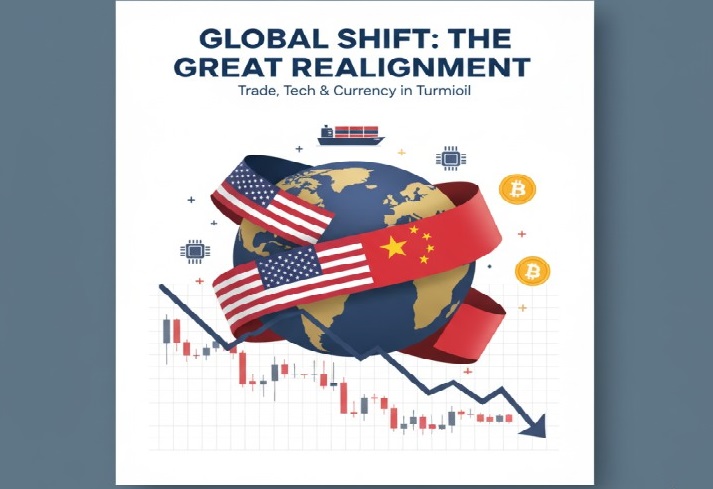
• In October 2025, China expanded export controls on rare-earth minerals essential for tech manufacturing.
• On Oct 10, Trump announced he would raise tariffs on Chinese exports to 100% and impose new software export controls, in retaliation.
• This volley of threats “shook global financial markets,” sending stocks down over 2% and rattling investors.
• The U.S. also warned of tighter controls on technology exports, and China responded with new port fees on U.S.-flagged ships.
The result was widespread economic uncertainty. Economists warned of slower growth and higher prices worldwide. IMF forecasts were cut, and major companies withdrew earnings guidance amid the unpredictability. The revived US/China tariff war has already driven up costs for businesses and pressured global markets cryptobriefing.com. Such geopolitical strife often triggers risk-off sentiment, as investors shun volatile assets.
The October 30 Meeting: US Optimism
Amid these tensions, high-level talks have been scheduled. On October 26, 2025, top U.S. and Chinese officials met in Kuala Lumpur to draft a framework for a deal. They reportedly agreed to pause the threatened 100% U.S. tariffs and delay China’s planned rare-earth export curbs by a year. U.S. Treasury Secretary Scott Bessent called the talks “very successful,” saying the new proposal would pause steeper tariffs and allow more rare-earth exports.
President Trump spoke optimistically at the ASEAN summit on Oct 26, 2025. He said, “I think we’re going to have a deal with China,” reflecting U.S. confidence ahead of the Oct 30 summit.
On Oct 26 Trump publicly conveyed confidence. “I think we’re going to have a deal with China,” he told reporters, projecting an optimistic stance. His administration announced that if finalized, the deal would resume massive U.S. soybean purchases and extend the current tariff truce beyond its Nov. 10 expiration. Vice President J.D. Vance similarly said the U.S. is prepared to negotiate if China “is willing to be reasonable”. Chinese officials described only a “preliminary consensus” but did not contradict U.S. optimism.
In short, the upcoming Trump–Xi meeting (scheduled Oct 30 at the APEC summit in South Korea) is now viewed with cautious hope. U.S. officials conveyed that a trade de-escalation framework is ready for leaders to “sign off” on. This upbeat news has buoyed markets: Wall Street rallied on speculation that a trade deal may be near, boosting risk assets from tech stocks to crypto. For example, crypto exchange stocks surged as investors expected lower trade friction.
The US/China Tariff War and Crypto Crash
What caused the recent crypto crash? In short, the trade war. When Trump escalated tariffs on Oct 10, global risk markets tumbled, and crypto plunged. In a historic one-day crash on October 10–11, over $19 billion in crypto positions were liquidated. Bitcoin, which had hit an all-time high (~$126,296) just days earlier, fell about 8–10%. On Oct 10 it bottomed near $104,782 (an 8.4% drop for the day). By Oct 11, Bloomberg noted that “the worst crypto crash in history” erased roughly US$850 billions of total market cap. Ethereum and many altcoins slid even more sharply; for example, Ethereum dropped around 5.8% to the mid-$3,600s and altcoins shed 15–20%.

The immediate trigger was Trump’s trade rhetoric and China’s actions. After Beijing announced tighter export controls on rare-earth metals, Trump vowed 100% tariffs as retaliation. This “reignited the trade war,” sparking panic selling in risky assets. The benchmark S&P 500 fell 2–3%, and crypto markets “struggled,” as one trader noted. Investors rushed to liquidate leveraged positions: many traders had used crypto as collateral, and automated margin calls hammered prices further. As a Reuters report explained, “largest liquidations in history” occurred after Trump’s 100% tariff threat.
Earlier in March 2025, another tariff announcement had similarly rocked crypto. When the White House imposed an additional 10% tariff on Chinese imports (raising total tariffs on China to 20%) on March 4, the crypto market lost roughly US$500 billion in a single day. Bitcoin slid nearly 10% that day, Ether fell about 15%, and major coins like XRP, ADA and SOL all plunged by double-digits. CryptoBriefing reported that trade-war anxiety triggered a broad risk-off selloff, with crypto suffering alongside stocks and oil cryptobriefing.com.
In summary: whenever the U.S. heightened China tariffs, crypto prices cratered. Tariff announcements in March and October 2025 wiped out hundreds of billions in crypto value. By contrast, calming news – like Trump backing down on tariffs or trade talks advancing – helped crypto partially recover. For instance, after Trump softened his tone on Oct 13 (“relations with China will all be fine”), Bitcoin rebounded to about $115,500. Such swings show how sensitive crypto markets have become to trade policy news.
| Date | Trade War Event | Crypto Impact |
|---|---|---|
| Mar 4, 2025 | U.S. raises tariffs on Chinese imports to 20% | Crypto market drops ~$500B; BTC falls ~10%, ETH ~15% |
| Oct 10, 2025 | Trump threatens 100% tariff on China | Bitcoin plunges ~8% to ~$107K; over $19B liquidated; market cap down ~$850B |
| Oct 13, 2025 | Trump eases tariff rhetoric | Crypto rebounds; BTC climbs back near $115K |
| Oct 26, 2025 | US-China talks agree tariff pause | Global markets rally on deal optimism; crypto steadies |
Why This Matters for Global Crypto Markets
The shockwaves from the US/China tariff war have global implications for cryptocurrency markets. First, the crash illustrates that crypto is increasingly tied to world events. Once considered a “de-coupled” asset, crypto now often moves with traditional markets. As one analyst noted, crypto does well when established assets (tech stocks, for example) are strong, but it “struggles to find a base” during geopolitical turmoil. In fact, experts observe a growing correlation between crypto prices and macroeconomic policy shifts. The fact that U.S. trade policy news can wipe out hundreds of billions in crypto value shows the market’s deep sensitivity.
Worldwide investors took note. Global crypto exchanges saw heavy selling; even non-U.S. investors scrambled as bitcoin and ether tumbled. Some institutional players booked losses (or opportunities) on the moves. David Hernandez of 21Shares observed that crypto’s “hyper-democratic and borderless nature” ultimately makes it a hedge against macro uncertainties – but only over the medium-to-long term. In the short term, crypto is behaving like a risk asset: trade-war shocks have triggered a classic risk-off flight. Crypto analyst The Kobeissi noted on Twitter that the crash reflected a “global move towards the risk-off trade,” with investors selling all risky assets cryptobriefing.com.
Beyond prices, the tariff war may shape crypto’s policy environment. Heightened tensions could lead governments to tighten financial controls or censor certain crypto uses (especially if digital assets are seen as threats to monetary policy). Conversely, frustration with trade controls might spur more interest in crypto as an alternative store of value if trust in fiat currencies erodes. For example, Marcin Kazmierczak of RedStone told Reuters that while tariffs rattled crypto stocks, protectionist policies “that weaken dollar hegemony could accelerate interest in decentralized alternatives over the medium-to-long term”. In other words, if the trade war undermines confidence in traditional trade rules or currencies, it might eventually boost crypto demand.
Finally, the episode underscores that cryptocurrency markets are now an integral part of the global financial system. In late 2025 the total crypto market cap hovers around $4 trillion, and institutional adoption is deepening. This integration means that any big shock in world politics – like the US/China tariff war – will ripple through digital assets. As one industry report put it, late 2025 is a “pivotal juncture” where crypto markets exhibit maturing sensitivity to global macroeconomic and geopolitical events. In short, crypto traders worldwide must now factor in geopolitics as much as technology and market sentiment.
Conclusion
The unfolding US/China tariff war is no longer just a trade story – it’s a crypto story too. The optimism around the October 30 meeting has eased some fears, but recent crashes show how trade policy can trigger extreme volatility in digital currencies. Crypto investors and policymakers alike are learning that global affairs directly affect crypto markets.
As the October 30 summit approaches, eyes will be on any hints of tariff rollbacks or agreements. A breakthrough could restore confidence (and prices) in crypto, while renewed conflict could spark further sell-offs. Either way, this episode has underscored crypto’s growing role as a barometer of international risk.
What do you think? Share your thoughts below, subscribe for updates, or check out our related analysis on crypto market trends and geopolitical risks. Staying informed and agile is key – the next big move in crypto may come from halfway around the world.



Pingback: UAE Crypto Adoption: Dubai’s Wealthy Embrace Digital Assets - tokensbuzz.com